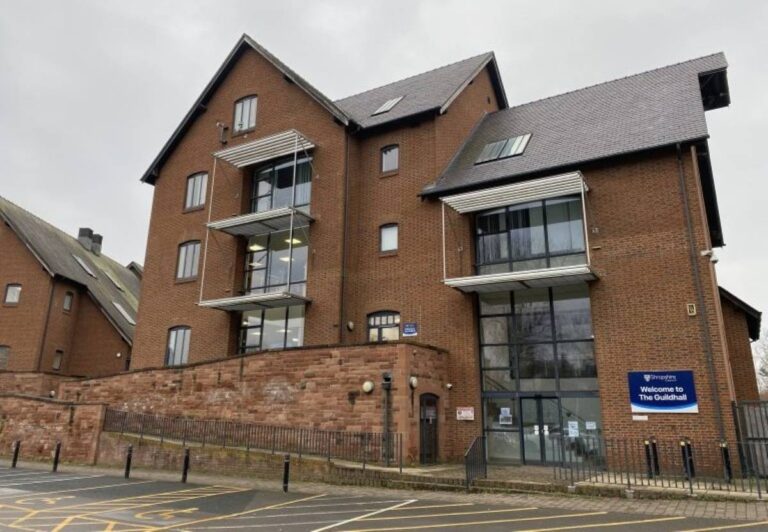
Shropshire Council has launched a vital public consultation, urging residents, businesses, and visitors to share their views as it grapples with a declared financial emergency and plans its budget for the 2026/27 financial year. The council anticipates spending more than it receives by March 2026, a financial pressure that is expected to persist into the following years.
Mounting Financial Challenges
The projected overspend stems from several deep-seated issues. Primarily, the ongoing challenge and rising costs of providing key services, particularly in adult and children’s social care, are a major drain on resources. Furthermore, the council has failed to achieve 36% of the savings it had planned to deliver over the past three years.
Rural authorities like Shropshire face inherent difficulties, including higher operational costs due to their size, a dispersed population, and the necessity of maintaining extensive infrastructure. Compounding these issues is the reality of lower government funding and the loss of specific grants, which has forced the council to rely more heavily on local council tax or implement painful service cuts.
A historical decision to freeze council tax for six years between 2010 and 2016 also led to a significant drop in income, undermining the council’s financial sustainability.
Steps Taken to Stabilise Finances
Given this critical situation, the council’s Cabinet declared a financial emergency in September 2025. Since the declaration, the council has moved to implement immediate measures to curb and reduce spending. It has formally asked the Ministry of Housing, Communities and Local Government (MCHLG) for permission to borrow money to sustain service delivery until the end of the current financial year and throughout the next.
Following a Corporate Peer Review in July, the council accepted free guidance from the Local Government Association (LGA). Crucially, an Improvement Board has been established, led by an Independent Chair, to oversee and support the council’s necessary improvement journey.
Planning for a Sustainable Future
While these steps aim to stabilise the current financial position, the council is simultaneously planning for the long term. This strategy includes developing an Improvement Plan to enhance financial management, clarify priorities, and support its workforce, alongside a dedicated People Plan to address organisational culture and workforce development.
A key focus is “getting the basics right,” which involves addressing six years of limited assurance identified by internal audit and complying with a statutory recommendation from a recent external audit. The council intends to invest strategically in capacity, using a portion of the proposed government borrowing to reduce risk and generate income.
Future plans to increase income could include raising fees and charges, selling council-owned assets, investing in profit-generating activities, and potentially increasing council tax—all of which are yet to be decided. The necessity of making difficult decisions on spending and service delivery remains, alongside a commitment to reviewing contracts for best value and petitioning the government for fairer funding calculations.
Social Care Dominates Spending
Each year, the council must divide its available budget across various service areas. For the current 2025/26 year, a vast majority of the budget is consumed by supporting people in need: approximately 66% of total spending is allocated to social care for adults and children.
This means that two-thirds of every single pound spent goes directly towards helping people who require extra support. The remaining budget must then be stretched across all other vital services, such as maintaining the county’s roads, collecting waste, and operating libraries and leisure centres.
Councillor Roger Evans, Shropshire Council’s Cabinet member for finance, underscored the gravity of the situation. “Councils across the country are facing significant financial pressures, and we are no exception,” he stated. “While there’s lots of things we’re doing to stop and reduce spending and improve the way we work, this is not enough.”
He added: “As well as our ask to borrow money from the government, we must take difficult decisions to set a balanced budget, and we want those decisions to be shaped by you. Please tell us what matters most—so we protect the essentials, support those who need us most, and invest in a sustainable future for our county.”
How to Get Involved
The council is appealing for maximum participation in its budget consultation. The survey will close on Friday 16 January 2026.
Online: Complete the Budget Consultation 2026/27 survey here.
Email: Send your views to TellUs@shropshire.gov.uk.
Post: Write to Tell Us, Feedback and Insight Team, Shropshire Council, PO Box 4826, Shrewsbury SY1 9LJ.
Alternative Formats: If you need materials in another format, contact customer services on 0345 678 9000 and explain the support you require.
Local Support: You can also visit your local library to request assistance in completing the budget consultation.
The feedback received will be a crucial component of the council’s budget setting process, with the resulting budget scheduled for consideration by the Full Council early next year.