Cases of the disease, known to be carried by badgers, have doubled in cattle over the last nine years. In 2010/11, bovine TB cost the taxpayer £90m.
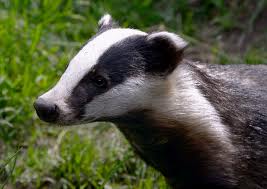
Yet the plans have been met by fierce opposition from the public, conservation groups and even celebrities.
Last month, a backbench motion in Parliament to stop the cull passed by 147 votes to 28. While this is unlikely to derail government plans, other blows such as bad weather, the London Olympics and the unexpected number of badgers within the culling zones have contributed to its postponement until 2013.
Owen Paterson, Environment Secretary and MP for North Shropshire, is not disappointed by the postponement and is adamant that the cull will go ahead next summer.
He says: “The number of badgers made it impossible this summer, and we have agreed with the NFU that postponement is the most practical course of action.”
For many the postponement of the cull and the Commons victory is a reason to celebrate, embodied by musician Brian May’s toast to the success of his ‘Save Me’ campaign on the House of Commons terraces.
Yet in the quiet, rural market town of Ellesmere, Shropshire, veterinary surgeon Mark Spurdens is less than impressed by this reaction.
“As a dyed in the wool Queen fan, I have been very disappointed in their lead guitarist’s comments and rather lopsided view on the badger cull,” he explains.
“I try to remain dispassionate on the subject but if you spent as much time as I do dealing with the fallout from the discovery of TB on farms which have been free of the disease for decades, it’s hard.”
As an established partner at Blakemere Veterinary Centre, Mr Spurdens has seen the damage bovine TB can do to farmers’ livelihoods. When he moved to Ellesmere in 1991, all cattle herds in his practice were clear of the disease, and all were on four-year testing.
However, in the last ten years there have been several cases of TB recorded on his farms, particularly in closed herds where cattle have not been transported from one farm to another.
Dairy farmer Stuart Gresty has first-hand experience of the epidemic. In the last six months, he has lost 39 cattle in a herd of 120. He believes this has something to do with the seven badger setts that have sprung up in the area.
He says: “I can live with badgers but not when they’re sick and getting in-between the boxes.
“DNA markers are at least ten years off, and at this stage vaccination is too impractical.
“Ten years ago our accountant said she didn’t have any customers with cases of bovine TB. Now it’s one in two.”
Performing skin tests to determine the presence of bovine TB is time-consuming for both vets and farmers. Before the last General Election, it was announced that in the interests of EU Competition Policy, ‘competitive tendering’ would be introduced to widen the access to TB testing, stretching practices beyond their means.
Mr Spurdens is sceptical of these plans: “If vets lose the right to perform TB tests on their own clients’ farms, we risk losing the close working relationship that local vets have built up with their clients over many years.
“It has been suggested that England will be split into thirty tendering areas, clearly each one too large for any single practice to tender alone.”
Despite such protests, there are also those in the county opposed to the cull. Jim Ashley is Chairman of the Shropshire Badger Group, an organisation founded in 1987 in response to badger digging and baiting in the area.
“In the early days we had quite a few successful prosecutions over badgers being shot and dumped on the side of the road,” he explains.
“With the recent killings in Wood Lane we are disappointed that such activities have not stopped altogether.”
Mr Ashley argues you only have to look at the Krebs trial, test culls carried out in 1998, to see the policy would be ineffective. He adds that while 26,000 cows were slaughtered for TB control in 2011, many more feel victim to lameness, old age and calving injuries.
He is also concerned that the cull poses a risk to public safety.
“They will be out shooting in the dark, and to my knowledge they’re not putting up any secure boundaries.”
Mr Paterson, however, believes such concerns are ill-founded.
“How could it possibly pose a risk? People are out every night shooting foxes and rabbits,” he says.
“Culling wildlife in the countryside is a regular occurrence and all the appropriate precautions will continue to be taken.”
The Shropshire Badger Group says that if the cull goes ahead next summer, they will distribute posters and invoke any legal measures available to prevent it.
For now, it seems the battle for the badgers will continue to rage in the corridors of Westminster. Yet while the uncertainty ensues, it is easy to forget that in rural communities across the country, it is farmers and their families who are paying the price for this bickering.
Article by: Tom Goulding
Tom Goulding is a NCTJ trainee, currently undertaking a fast-track diploma with News Associates in London. Recent examples of Tom’s work include pieces for the Islington Gazette, Radio Times and Positive News, to find out more visit: http://tomgouldingportfolio.blogspot.co.uk.